The Match Cut Turns a Visual Echo into a Story Transition
A match cut links two shots through shape, movement or composition, helping you see how a visual echo can carry an idea across a scene change.
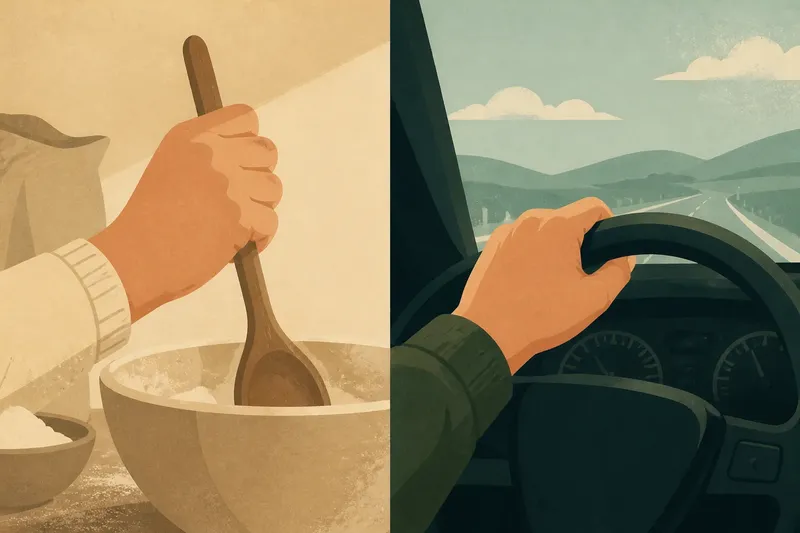
A hand reaches for a glass, and the next shot shows a hand reaching for a steering wheel. The cut may cross years, places or characters, yet the repeated gesture makes the change feel connected. A match cut uses that visual echo to carry an idea from one scene into another.
In screen language, “match” means that some feature of the outgoing shot lines up with the incoming one. It need not be an exact match. Shape, movement, colour, framing or a sound-image relationship can provide the link. The effect can be graceful, unsettling or playful, depending on what changes around the repeated feature.
1. What makes a cut a match cut?
A cut is the transition from one shot to the next. In an ordinary continuity cut, the connection often comes from the same ongoing action: a character turns towards a door in one shot, and the next shows the door opening. A match cut also links shots, but makes a particular similarity noticeable across a change of scene, time, place or subject.
The match is usually more than a coincidence. The image invites you to compare the shots. A circular lamp might give way to the moon; a moving train wheel might give way to a spinning record. The first image leaves a pattern in your mind, and the second answers it with a new meaning.
Not every repeated shape is a match cut. If two shots happen to contain similar circles but the edit does not draw attention to that resemblance, the connection may be incidental. A purposeful match is legible enough to notice and meaningful enough to reward the comparison.
2. Which visual features can carry the match?
Filmmakers can connect shots through several kinds of resemblance. These are useful ways to describe what you are seeing, not rigid categories; a single cut may use more than one.
- Shape and position: A round object in one shot may be replaced by another round object in a similar place in the frame. A face framed in a doorway could lead to a face framed by a window.
- Movement: A character’s arm sweeps from left to right, then a curtain or machine continues that direction. The motion gives the cut a sense of flow, even though the action has changed.
- Composition: Similar arrangements of figures, objects and empty space can link shots. A crowded table might cut to a crowded street, preserving the sense of pressure while changing its source.
- Colour or light: A patch of red, a strip of bright light or a sudden shadow can carry the eye into the next scene. This is especially clear when the colour has a developing association in the story.
- Sound across the cut: A sound can begin before the new image appears or continue after it. This is often called a sound bridge. When the incoming image also echoes the outgoing one visually, sound and image reinforce the transition; sound alone does not make a visual match cut.
These features matter because viewers register composition and movement quickly, often before they put the connection into words. A good match gives the eye a path across the edit. The story can then use that path to invite a comparison rather than explain it in dialogue.
3. How does the echo become an idea?
A match cut can make two unlike things seem related without claiming they are identical. The meaning comes from both the resemblance and the difference. A circular ceiling light may resemble a full moon, but the new setting changes the feeling: one image may suggest a controlled interior, the other an open night sky.
Consider an invented scene: a young baker closes a flour-dusted hand around a wooden spoon, and the next scene shows an older baker closing a hand around a paintbrush in a different town. The similar grip and framing connect the characters. The changed tool and setting suggest that a craft, habit or inheritance has travelled, while leaving open whether the two people share a direct bond.
That open space is part of the device’s strength. A cut can suggest a link without spelling out its precise meaning. It may connect a personal choice to a larger system, make a past image haunt the present, or turn a familiar object into a reminder. If the scenes provide no useful contrast or association, however, the echo may feel decorative rather than expressive.
4. How is a match cut different from similar edits?
Related editing terms can overlap, but they describe different aspects of a transition. Knowing the distinction makes it easier to name what an edit is doing.
- Continuity cut: Preserves the apparent flow of an action or conversation. The main aim is to make the change of camera angle easy to follow, not to draw attention to a symbolic resemblance.
- Graphic match: Connects shots through similar visual design, such as shape, colour or composition. It is often used as another name for a visual match cut, though some discussions use it more narrowly for a strong compositional resemblance.
- Jump cut: Removes part of an action within a scene, making time appear to skip or the framing to jerk. Its noticeable discontinuity differs from a match cut’s visual link between images.
- Smash cut: Makes an abrupt transition, often between contrasting sounds, images or moods. It may share a shape or movement with the next shot, but abrupt contrast—not visual resemblance—is its defining impression.
These labels describe effects, not boxes that every edit must fit neatly. One transition might preserve a visual match while also making a sharp tonal break. Ask what draws attention first: the continuing action, the resemblance, the time skip or the abrupt contrast.
5. What should you notice when a match cut appears?
Look at the moment just before and after the edit. Rather than stopping at “those images look alike”, ask what the cut asks you to carry across. A few focused questions can reveal the story work beneath the visual trick.
What stays the same between the shots?
Identify the clearest shared feature: shape, direction of movement, framing, colour or sound. Naming it helps distinguish a deliberate echo from a resemblance that may not matter.
What changes besides the image?
Notice shifts in time, place, character, scale or mood. The contrast often supplies the meaning, because the repeated feature lets you compare settings or circumstances that would otherwise feel unrelated.
Does the echo return later?
A recurring visual pattern can gather meaning as the story develops. If an object, gesture or framing style appears again, consider whether its association has changed since the first match.
Would the transition work without the resemblance?
If the edit would still make basic narrative sense, the match may be adding a thematic or emotional layer rather than supplying essential plot information. If the resemblance is difficult to identify, the transition may instead depend on context, sound or a more subtle visual cue.
6. How can you read a match without overworking it?
Start with what is plainly on screen, then move to a cautious interpretation. For example: “The same diagonal movement links the scenes” is an observation. “The second scene inherits the first character’s sense of urgency” is a possible reading, especially if the surrounding story supports it. Keeping those claims separate prevents a clever-looking edit from becoming a licence to invent hidden meaning.
Context matters. A repeated object may carry an established association, or the film may use it only to smooth a transition. Dialogue, performance, sound and what follows can strengthen one interpretation or weaken it. A useful reading should account for both the resemblance and the changed circumstances.
It is not worth the effort to assign a fixed symbol to every matching shape. A circle need not always stand for completion, and a repeated colour need not have a secret code. If the connection does not affect how you understand the scenes, it may simply be a neat piece of visual continuity.
When you next notice a match cut, hold the two images together in your mind for a moment. The first shot supplies the echo; the second changes its setting or significance. That small act of comparison is how a visual transition can move a story forward without stopping to explain itself.