Where to Begin When a Series Has a Prequel
Where to begin when a series has a prequel depends on what you value: preserve a first-time viewer’s reveals or follow the story’s timeline clearly.
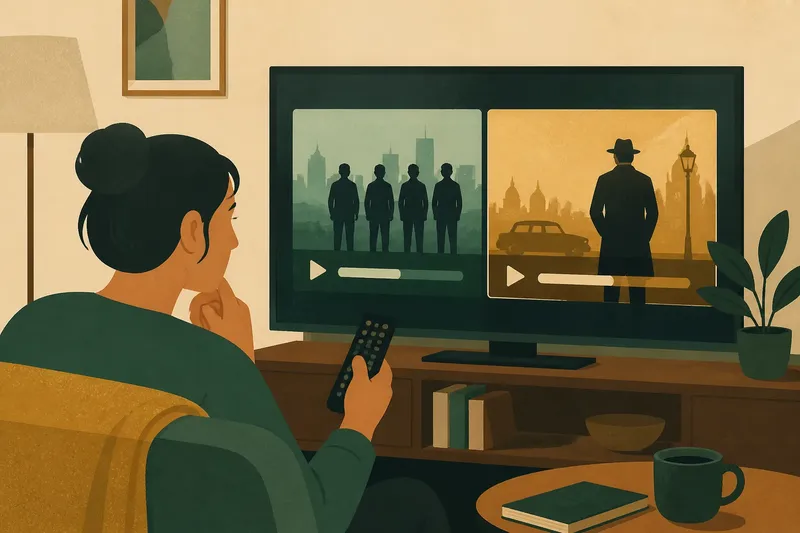
You have the original series queued up when a streaming page places its prequel beside it. The prequel appears to start earlier, but that does not automatically make it the right first watch. Where to begin when a series has a prequel depends on whether you want a story’s reveals to arrive as released or its events to unfold in timeline order.
What does each order actually preserve?
Release order means watching the original series, films or episodes in the order audiences first encountered them, then moving to the prequel. It preserves the sequence in which the creators introduced information. A prequel may explain a familiar character or event, but it was made for viewers who already know what the original chose to show.
Story chronology means watching by the order of events within the fictional world. A prequel comes before the original, at least in broad terms. This can make the plot easier to follow as a continuous history, but it may also introduce a character, relationship or outcome earlier than the original intended.
These are viewing choices, not measures of quality. A series may work in either order, or strongly favour one. The useful question is not simply, “Which happened first?” It is, “What should I know, and when should I know it?”
Why does release order usually protect reveals?
A prequel is commonly written with the original already in the audience’s memory. It can use dramatic irony: viewers recognise a name, object or decision and understand its significance before a younger character does. That recognition may be part of the scene’s effect, not spare information that the prequel simply happens to contain.
The original can also make a revelation from partial information. It may introduce a mysterious absence, a strained relationship or an unexplained choice, then gradually clarify what lies behind it. The prequel might answer that question directly. Watching it first can turn an intended discovery into background knowledge.
Release order does not preserve every surprise. A prequel’s title, premise or opening scenes may signal where the story is heading. Still, it gives each instalment the context its first audience had, which is often the safer choice for a first-time viewer who enjoys uncertainty and gradual disclosure.
When is chronology easier to follow?
Timeline order can be a sensible choice when you chiefly want a continuous account of events. If the prequel begins with a younger generation and the original follows their successors, for example, watching the earlier events first can make family ties and political changes easier to keep straight.
It may also suit a series whose prequel tells a largely self-contained story and introduces only a few connections to the original. In that case, starting earlier can establish the setting and its rules without making the original difficult to understand. The important distinction is between chronological clarity and narrative priority: an event can happen first without being the best first thing to learn.
Chronology becomes less tidy when a prequel contains flashbacks, jumps between periods or overlaps with the original. Some series also reveal later consequences within earlier-set scenes. Sorting every episode by fictional date can fragment a story that was shaped to be watched as a whole.
How do you choose an order for a first watch?
Use this simple decision rule: choose release order if a reveal landing at its intended moment matters more than knowing the full timeline. Choose chronology if your main pleasure is tracing how events lead into one another, and you are comfortable learning background information earlier.
Before deciding, check how the prequel is described and where its connections sit. A prequel presented as a direct continuation in another era may expect familiarity with the original. One marketed as a standalone starting point may be designed to welcome newcomers. Descriptions are clues, not promises; the opening episode can still set a different expectation.
For an invented example, say you are choosing between a long-running detective series and a prequel about the detective’s first case. If the original treats the detective’s past as a question that unfolds over time, begin with the original and save the prequel. If the prequel is framed as a separate case and you mainly want to see how the detective entered the profession, starting there may feel more direct.
Do not spend an evening building a minute-by-minute timeline from fan-maintained episode lists unless the story genuinely requires it. A rough order is often enough; obsessive sorting can make a relaxed watch feel like a research task.
What should you check before starting?
- Look at the release dates or original broadcast sequence. This establishes the order in which the story’s information first reached viewers.
- Read the prequel’s short synopsis. Notice whether it assumes knowledge of characters, places or outcomes from the original.
- Check whether the original names an unresolved past event. If that question is treated as a mystery, preserve the original’s order if you want to discover its answer there.
- See whether the prequel overlaps the original’s events. Overlap makes a strict timeline harder to follow and can create awkward stops between episodes.
- Decide what you most enjoy. Choose release order for controlled reveals; choose chronology for a broad, continuous history.
- Keep the order flexible. If the first instalment feels clear and engaging, there is no need to interrupt it to correct a minor timeline detail.
This is a decision aid, not a rulebook. Where the official episode order or a version’s edits vary by region, follow the distributor’s listing and any viewing guidance supplied with the release; local editions can present material differently.
What if the prequel is already on your screen?
There is no need to abandon it automatically. If you have watched only a little and have not encountered information that changes the original’s central mysteries, you can switch to release order now. If you are already invested, continuing may be more satisfying than treating the choice as a mistake.
For a group watch, agree on the priority before pressing play. One viewer may care about surprises, while another may find a timeline easier to follow. A practical compromise is release order for the first pass, followed by the prequel as context; that leaves room to revisit earlier scenes with new knowledge without asking anyone to pause for a chronology audit.
Which order fits your viewing preference?
Should first-time viewers usually start with the original?
Usually, yes, if the original was released first and its reveals matter to you. Release order preserves the information sequence the creators first presented, while leaving the prequel available as later context.
Does a prequel spoil the original?
It can disclose background or outcomes that the original treats as uncertain, though the effect varies by series. A synopsis or opening scene may reveal how closely it connects to the original before you commit.
Can I watch a series in chronological order?
Yes, if following events from earlier to later is your preference and you do not mind receiving some background information ahead of its original introduction. Be prepared for timeline gaps or overlaps if the prequel shifts between periods.
What if the streaming service lists the prequel first?
Platform placement is not necessarily a recommended viewing order. Check the release sequence and the prequel’s description, then choose based on whether you value a reveal-led first watch or a clearer fictional timeline.
What is the simplest rule to keep?
When a series has a prequel, start with the original if you want discoveries to arrive in release order; start with the prequel if a continuous timeline matters more to you. That is the clearest answer to where to begin when a series has a prequel, and it leaves you free to change course if the story itself makes another order feel natural.
Whichever route you take, keep the distinction in mind: release order follows the audience’s path through information, while chronology follows events inside the story. Once you know which path you prefer, the rest is simply choosing what to watch next.